
Biblical Worldview Resources
for the Church and Family
Biblical Worldview Resources
for the Church and Family




Shop the Marketplace





Podcasts

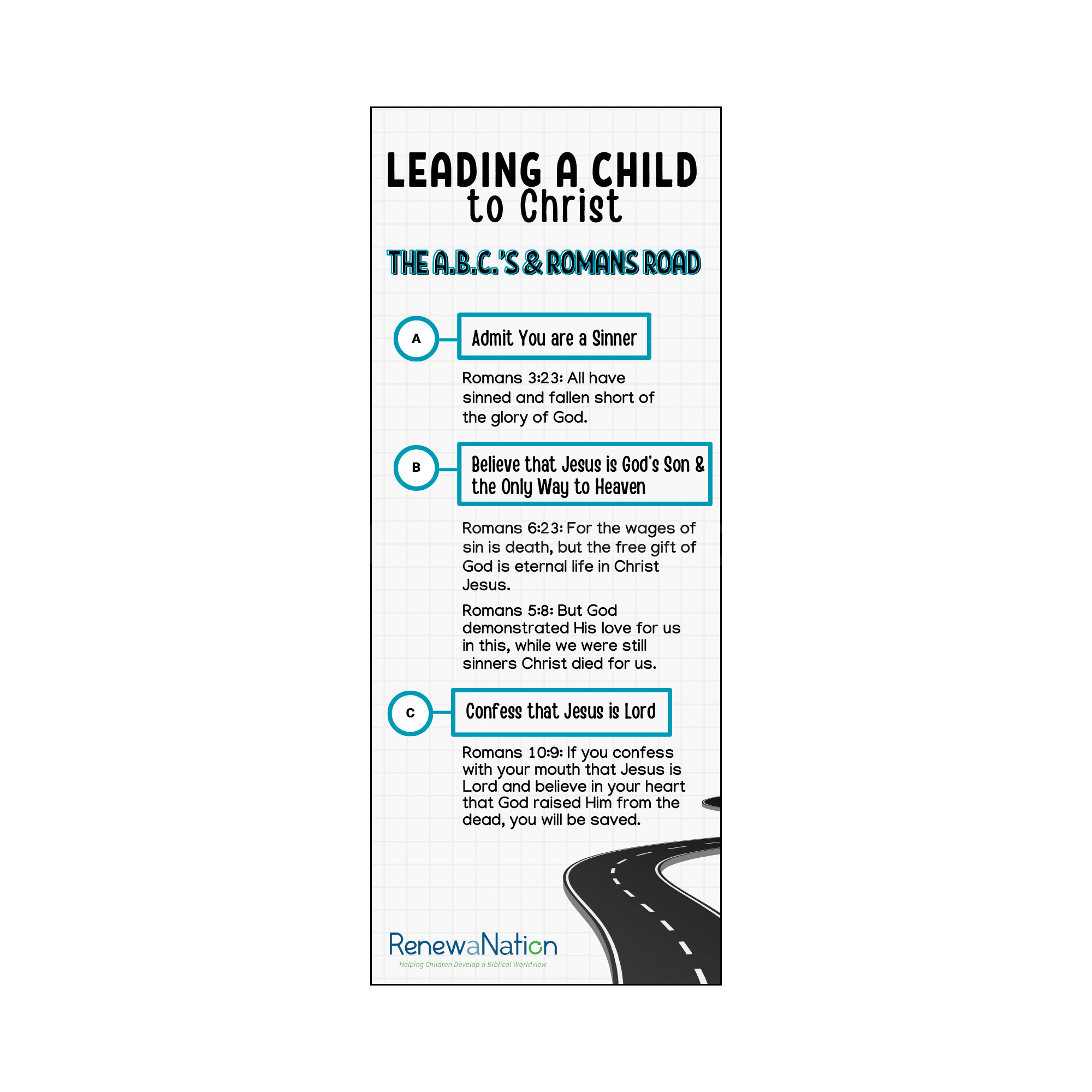
There are 5 big things every kidmin leader needs to know: the why behind children's ministry, how to use every minute, how to lead a child to Christ, how to explain theology, and that their faith matters.
Eternity is at stake.
Resources Mentioned in this Episode:
- Intentional Children's Ministry – https://link.amazon/B0842VeAb
- Believer's Baptism – https://link.amazon/B0grtBbdz
- Roll-&-Thank Prayer Activity – https://amberpike.org/blog/f/roll–thanks-an-interactive-prayer-station-of-thanksgiving
- Leading a Child to Christ Card – https://store.renewanation.org/products/leading-a-child-to-christ-card?_pos=1&_psq=leading&_psid=8d8a1a029&_ss=e
- Leading a Child to Christ Blog – https://www.renewanation.org/post/six-recommendations-for-leading-a-child-to-christ

Arlene Pellicane has a sobering number for parents: if a boy plays video games a fairly conservative ten hours a week starting at age nine, he’ll have spent a full year of his life in front of a gaming console by the time he’s twenty-one. If a girl is on social media the similar amount of time, she will spend a full year of her life on social media. In this episode, Arlene, author of The Great Tech Reset: Reclaiming Real Life for Christian Families, joins Josh and Jen to talk honestly about what screens are costing our children and what to do about it.
Arlene walks through her ABCD framework for the harms of unchecked screen time, why boredom is a gift rather than a problem to solve, and why delaying a phone or social media account tends to produce a more mature, self-governed teenager than handing one over early and hoping to monitor it. She also unpacks two of the most common myths parents use to justify giving kids devices sooner than they should.
This conversation goes beyond screen time limits to the deeper stewardship question underneath: what is discipling our children when we’re not watching? Arlene makes the case that families have an opportunity, not just a restriction, in front of them, and offers a practical, faith-rooted starting point for any family ready to reclaim real life together.
Book 50 Things Every Child Needs to Know Before Leaving Home: https://xypmuf.s.gy/50gsfpc
Renewanation: https://xypmuf.s.gy/rangsfpc
Gospel Shaped Family Homepage: https://xypmuf.s.gy/gsfhpc
Sign up to get regular updates: https://xypmuf.s.gy/gsfpem
Grab a free copy of The Great Tech Reset at TechResetBook.com (while supplies last, courtesy of Summit Ministries)

Matthew 22:1-14
- Let us observe that the salvation of the Gospel is compared to a marriage feast.
- Let us observe that the invitations of the Gospel are wide, full, broad, and unlimited.
- Let us observe that the salvation of the Gospel is rejected by many to whom it is offered.
- Let us observe that all false professors of religion will be detected, exposed, and eternally condemned at the last day.
“The Gospel, in short, is an offer of food to the hungry–joy to the mourner–a home to the outcast–a loving friend to the lost. It is glad tidings. God offers, through His dear Son, to be at peace with sinful man.”
Podcasts

There are 5 big things every kidmin leader needs to know: the why behind children's ministry, how to use every minute, how to lead a child to Christ, how to explain theology, and that their faith matters.
Eternity is at stake.
Resources Mentioned in this Episode:
- Intentional Children's Ministry – https://link.amazon/B0842VeAb
- Believer's Baptism – https://link.amazon/B0grtBbdz
- Roll-&-Thank Prayer Activity – https://amberpike.org/blog/f/roll–thanks-an-interactive-prayer-station-of-thanksgiving
- Leading a Child to Christ Card – https://store.renewanation.org/products/leading-a-child-to-christ-card?_pos=1&_psq=leading&_psid=8d8a1a029&_ss=e
- Leading a Child to Christ Blog – https://www.renewanation.org/post/six-recommendations-for-leading-a-child-to-christ
Arlene Pellicane has a sobering number for parents: if a boy plays video games a fairly conservative ten hours a week starting at age nine, he’ll have spent a full year of his life in front of a gaming console by the time he’s twenty-one. If a girl is on social media the similar amount of time, she will spend a full year of her life on social media. In this episode, Arlene, author of The Great Tech Reset: Reclaiming Real Life for Christian Families, joins Josh and Jen to talk honestly about what screens are costing our children and what to do about it.
Arlene walks through her ABCD framework for the harms of unchecked screen time, why boredom is a gift rather than a problem to solve, and why delaying a phone or social media account tends to produce a more mature, self-governed teenager than handing one over early and hoping to monitor it. She also unpacks two of the most common myths parents use to justify giving kids devices sooner than they should.
This conversation goes beyond screen time limits to the deeper stewardship question underneath: what is discipling our children when we’re not watching? Arlene makes the case that families have an opportunity, not just a restriction, in front of them, and offers a practical, faith-rooted starting point for any family ready to reclaim real life together.
Book 50 Things Every Child Needs to Know Before Leaving Home: https://xypmuf.s.gy/50gsfpc
Renewanation: https://xypmuf.s.gy/rangsfpc
Gospel Shaped Family Homepage: https://xypmuf.s.gy/gsfhpc
Sign up to get regular updates: https://xypmuf.s.gy/gsfpem
Grab a free copy of The Great Tech Reset at TechResetBook.com (while supplies last, courtesy of Summit Ministries)
Matthew 22:1-14
- Let us observe that the salvation of the Gospel is compared to a marriage feast.
- Let us observe that the invitations of the Gospel are wide, full, broad, and unlimited.
- Let us observe that the salvation of the Gospel is rejected by many to whom it is offered.
- Let us observe that all false professors of religion will be detected, exposed, and eternally condemned at the last day.
“The Gospel, in short, is an offer of food to the hungry–joy to the mourner–a home to the outcast–a loving friend to the lost. It is glad tidings. God offers, through His dear Son, to be at peace with sinful man.”