
3 Impactful Ways to Teach the Biblical Narrative
SHARE THIS POST WITH OTHERS
The Bible isn’t a collection of disjointed stories. It’s one big story containing true events and accounts. The Bible tells of God’s redemptive love for His creation, with everything pointing to or flowing out of Jesus.
When we just teach Bible stories to kids, they don’t get an accurate view of the inerrancy of scripture, sometimes believing the stories are no different than princess and superhero stories, and they don’t develop an accurate understanding of the saving grace of Jesus. We must teach the biblical narrative so children can truly understand the Bible and the person and work of Jesus Christ.
#1 Don’t use the word “story.”
All of scripture is true (John 17:17). When we tell children to listen to today’s Bible story, it can seem no different than the made-up stories of princesses, superheroes, and talking animals they watch daily.
#2 Connect it to Jesus.
No matter what passage of Scripture you’re reading, connect it to Jesus. How is Christ being anticipated or fulfilled?
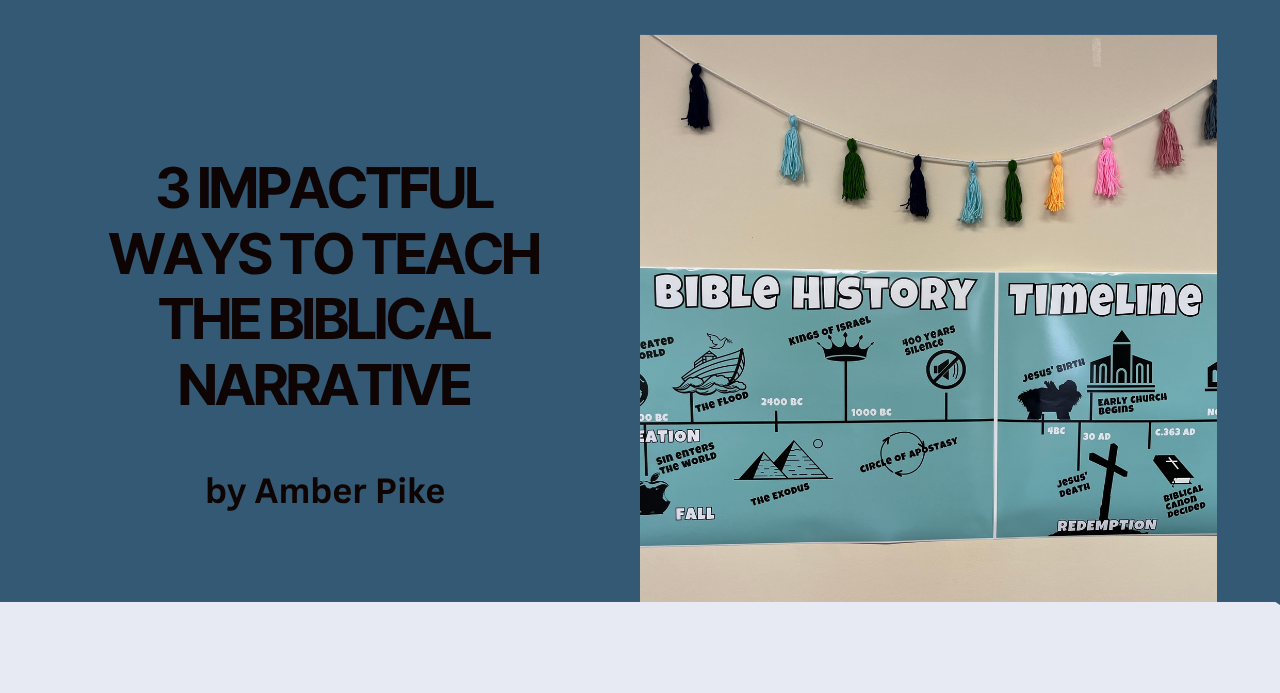
#3 Use a timeline to show where in the narrative you’re at.
A simple timeline helps children to visually see where in the narrative of Scripture your passage is taking place.
Looking for a simple timeline to use? Grab this digital download from our online store.
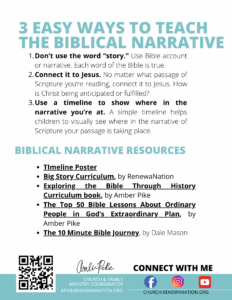
Teaching the biblical narrative is important. Save the biblical narrative quick-tip sheet below for more tips and helps!
The Author

Amber Pike is an author, speaker, children and family ministry leader, and momma whose passion is to see kids loving the Word of God and walking with Him! She currently serves as the Church and Family Ministry Coordinator at RenewaNation. Amber is the author of Exploring the Bible Through History, The Family Cookbook Devotional, Top 50 Ordinary People in God’s Extraordinary Plan, and Intentional Children’s Ministry. Her most important (and favorite) role in life, however, is taking care of the wonderful family God has blessed her with.
Related Posts
Amber Pike
Whether you call it the Lord's Supper or something else, the question remains—how should we handle it with our children? Children need to understand both the significance and importance of the Lord’s supper. From the classroom, sanctuary, and the home, we need to show children the importance of what Jesus has done for us. [...]

Amber Pike
You’ve planned, promoted, and executed your event. Once everything is cleaned up and put away, the event is over, right? No! The last part of any event needs to be an evaluation. After your event, ask yourself and your team these questions. What worked well? What needs improvement? Any overages or shortages? How [...]

Amber Pike
When you share the gospel with children, you aren’t doing it because you like to hear yourself talk. You aren’t teaching them the depths of God’s love for them in hopes that no one pays attention or remembers the lesson. You want the boys and girls sitting in your ministry to listen as you [...]